.png?width=1024&name=Untitled%20design%20(9).png)
When safety, uptime, and compliance are non-negotiable, API standards play a critical role in oilfield operations. From drilling rigs to hoisting equipment, API-certified tools help ensure consistent quality, verified performance, and safer job sites.
If you are looking for dependable tools you can trust, understanding API standards, API Spec 8C, and the API Monogram is essential.
- What Are API Standards?
- Why Do API Standards Matter?
- Why Should My Company Value API Standards?
- Are API Standards Legally Required?
- What Is the API Monogram?
- What Does the API Monogram Mean?
- Which API Specifications Apply to Drilling and Hoisting Equipment?
- Why Is API Spec 8C Important?
- What Should I Look for When Choosing an API-Licensed Manufacturer?
- How Can I Verify a Company’s API License?
- Why Choose API Certified Tools?
What Are API Standards?
API standards are formal requirements established by the American Petroleum Institute that govern how oilfield equipment is designed, manufactured, tested, and documented.
These standards apply to drilling and production operations and are designed to promote safety, quality, and consistency across the oil and gas industry. When equipment meets API standards, it has been evaluated against recognized industry benchmarks rather than manufacturer-defined criteria alone.
Why Do API Standards Matter?
API standards matter because they reduce risk, improve safety, and ensure uniform performance across critical equipment.
By establishing consistent requirements, API standards help prevent failures caused by poor design, undocumented changes, or unverified materials. API standards address:
- Design and design changes
- Product trace-ability
- Product requirements
- Monitoring and measuring product performance
- Verification of controls and preventive action
- Reviewing product requirements
- Monitoring and measuring product conformance
- Final inspection activities
Together, these controls create a safer and more predictable operating environment.
Why Should My Company Value API Standards?
Companies that invest in API-certified tools gain competitive, operational, and safety advantages.
API standards help reduce downtime, streamline inspections, and protect personnel by ensuring equipment performs as expected. API-compliant products provide:
- Verification that the products meet the requirements of the API specifications and standards
- A management system which assures processes are implemented to create consistent, conforming products
- Processes and controls to identify and address customer requirements, complaints or product issues
- A method to trace products back to the original manufacturer, and design/performance requirements
- A means to report industry product; or to process issues and nonconformity
- Visible identification of the field of specifications/standards to which the product was manufactured to conform.
Are API Standards Legally Required?
In many situations, API standards are required by regulation, inspection criteria, or customer specifications.
For example, when re-certifying drilling elevators, inspectors typically require confirmation that all applicable components comply with API Spec 8C, the standard governing drilling and production hoisting equipment. Purchasing from an API-licensed manufacturer helps ensure equipment will meet inspection requirements.
What Is the API Monogram?
The API Monogram is a licensed mark that confirms a product was manufactured by an API-licensed company and meets applicable API specifications.
Only manufacturers who have passed API audits and maintain an approved quality management system are authorized to apply the API Monogram. The mark is stamped directly onto eligible equipment and cannot be used without active licensing.
What Does the API Monogram Mean?
The API Monogram confirms verified compliance with API manufacturing and quality requirements.
Specifically, it means:
- Licensee’s QMS is compliant with API Spec Q1
- Licensee has the proven capability to manufacture to API Product Specification requirements
- Licensee warrants to API and the purchaser that products meet all the API requirements
- The product conforms to API Standards
- Licensee can only apply the API Monogram on products for which they have a license
- API Monogram Licensee is current/approved
Which API Specifications Apply to Drilling and Hoisting Production Equipment?
API Specifications 8C apply to drilling and production hoisting equipment.
This specification defines requirements for equipment such as elevators and other hoisting components used in drilling and production operations.
Why Are Drilling and Hoisting Production API Specs Important?
API Spec 8C is important because it establishes safety, quality, and performance requirements for hoisting equipment.
API Spec 8C helps ensure:
-
Safety: Equipment is designed and tested to reduce failure risk
-
Quality: Manufacturing processes and materials meet defined standards
-
Efficiency: Consistent performance reduces downtime and inspection delays
Together, these factors support safer operations and long-term equipment reliability.
What Should I Look for When Choosing an API-Licensed Manufacturer?
When evaluating suppliers, look for visible proof of API licensing and documented compliance.
Key indicators include:
-
The API Monogram stamped on eligible products
-
Clear documentation of applicable API specifications
-
Traceability records and inspection documentation
-
Active listing on the API Composite List
Keystone Energy Tools is an example of an API-licensed manufacturer that precision-machines and stamps the API Monogram on qualifying hoisting equipment.
How Can I Verify a Company’s API License?
You can verify a manufacturer’s API license using the official API Composite List.
API provides real-time license verification, allowing buyers and inspectors to confirm a company’s licensing status and authorized product scope. Verification is available through the API Composite List maintained by the American Petroleum Institute.
Why Choose API Certified Tools?
API-certified tools provide confidence that equipment meets recognized industry standards for safety and performance.
When quality, dependability, and compliance matter, choosing tools that meet and exceed API standards helps protect your people, your operations, and your bottom line.
Seek the API Monogram. Seek tools that meet and exceed API standards. Seek Keystone Energy Tools.
About Keystone Energy Tools
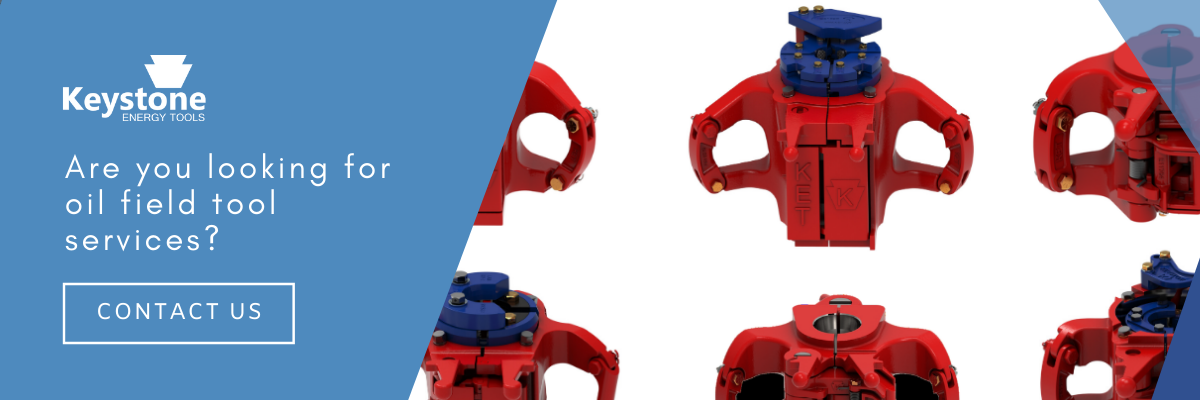
 Keystone Energy Tools is a manufacturer with over fifty years of combined experience in designing, manufacturing, and delivering high-quality oilfield tools, including elevators, slips, dies and inserts, tongs dies, safety clamps, stabbing guides, drill pipe float valves, baffle plates, float valve pullers, rotating mouseholes, and tong blocks.
By using the latest in 3D modeling for product design and by staying current with the rapid advances in manufacturing technology and quality-assurance standards, Keystone is able to manufacture and produce the most reliable products on the market today. All Keystone Handling Tools are manufactured according to API 8C and API 7K Standards.