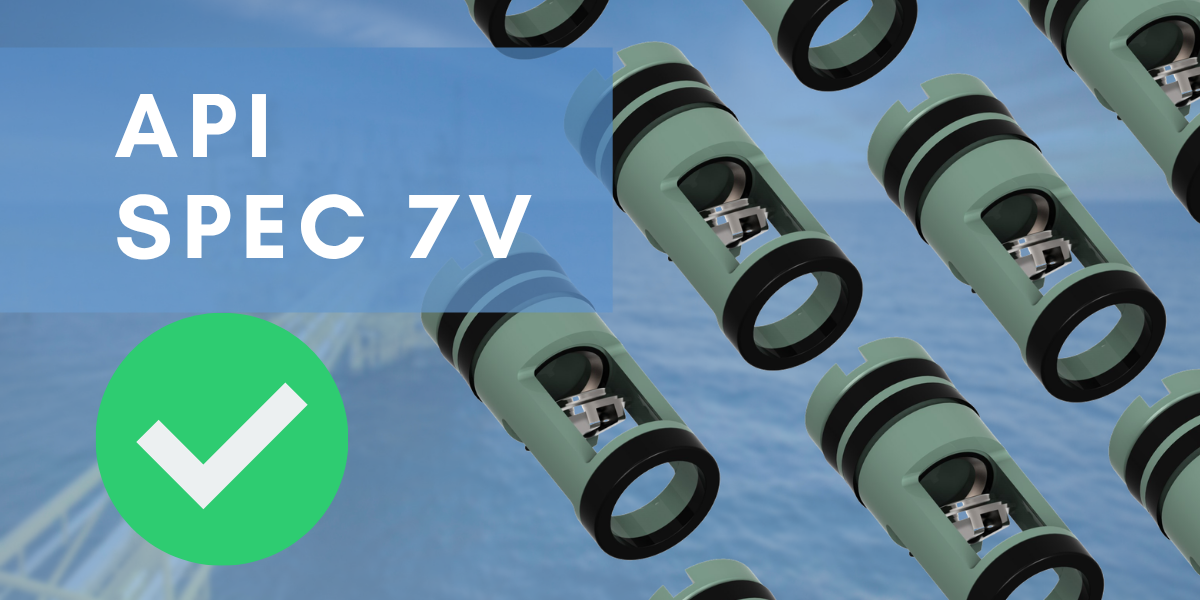
Keystone Energy Tools is now the first drill pipe float valve manufacturer in the world certified to API Spec 7V, covering all G and F series models in every size. If you spec, source, or run drill pipe float valves, you can now require API Spec 7V certification on your purchase orders and verify it through API's Composite List. Ask your current supplier where they stand on 7V - the answer tells you a lot about what's actually inside the valve body.
- What Is API Spec 7V?
- Who Is Certified to API Spec 7V?
- What Does API Spec 7V Test For?
- How Hard Is the Erosion Slurry Test, Really?
- Why Does API Spec 7V Matter for Drilling Operations?
- What's Covered Under Keystone's API Spec 7V Certification?
- How Does API Spec 7V Compare to Other API Standards?
API Spec 7V certification has been on the books since the American Petroleum Institute first published the specification, but until now, no drill pipe float valve manufacturer had ever earned it. That changed this year. Keystone Energy Tools became the first DPFV manufacturer globally to pass the full 7V testing protocol and carry the certification on every G series and F series valve we build. This post walks through what the spec covers, what the testing actually involves, and why a 200-hour slurry test should matter to anyone running drilling operations.
What Is API Spec 7V?
API Spec 7V is the American Petroleum Institute standard that defines design, manufacturing, testing, and quality requirements for three categories of downhole flow control equipment: drill pipe float valves (DPFVs), kelly valves, and internal blowout preventers (IBOPs). Keystone holds certification specifically under the Drill Pipe Float Valves scope.
The specification exists because float valves are a last line of defense. They sit inside the drill string and prevent backflow - the kind of backflow that, in a worst-case scenario, contributes to a kick or a blowout. The American Petroleum Institute publishes Spec 7V to give operators a way to verify that the valve in their string was built and tested to a defined standard, not just to an internal company spec.
For background on how API standards work and why the API monogram matters on a tool, see our earlier piece on API certified tools and the API monogram. API Spec 7V sits in the same family as Spec 7K (rotary drilling equipment) and Spec 8C (drilling and production hoisting equipment) - related but distinct standards that each cover a specific category of equipment.
Who Is Certified to API Spec 7V?
As of this announcement, Keystone Energy Tools is the only drill pipe float valve manufacturer in the world certified to API Spec 7V. That's not marketing language - it's verifiable through API's Composite List, which is the public registry of every company licensed to mark products with the API monogram. You can search the API Composite List directly.
The certification covers Keystone's complete float valve line - both F series (the standard plunger-type design) and G series (the flapper-type design) in every size we manufacture. There's no "certified line" and "non-certified line." If it's a Keystone DPFV, it's covered.
.jpg?width=792&height=612&name=Certificate%207V-0006_20260416090028%20(1).jpg)
What Does API Spec 7V Test For?
API Spec 7V tests whether a float valve can hold pressure, hold pressure again after being beat up by abrasive drilling mud, and hold pressure again after a hundred open-close cycles. It's a sequenced 7-step protocol designed to simulate the abuse a valve takes during a real drilling job, then verify the valve still seals afterward. The full sequence runs in this order:
- Hydro Production Pressure test - the baseline seal check at rated working pressure using water as the test medium.
- Nitrogen pressure tests at low and high pressure - run at both ambient temperature and at the valve's rated operating temperature. Nitrogen is used because gas is harder to seal against than liquid; if the valve holds nitrogen, it will hold mud.
- Hydro pressure tests at low and high pressure - again at both ambient and rated temperature. This confirms the valve seals against liquid across its full operating envelope.
- Erosion Slurry Test - 200 hours of drilling mud with 2% sand content pumped continuously through the valve. This is the test that breaks valves that aren't built to spec.
- Flow Test - water pumped through the valve while it's mechanically cycled open and closed 100 times. This stresses the spring, the seat, and the sealing surfaces.
- Repeat Nitrogen pressure tests - the same low/high, ambient/rated-temperature gas tests, run again after the slurry and flow tests. The valve has to seal as well after the abuse as it did before.
- Repeat Hydro pressure tests - the same liquid tests repeated post-abuse. Same pass criteria.
The valve has to pass every step. One failure and the certification doesn't issue.
How Hard Is the Erosion Slurry Test, Really?
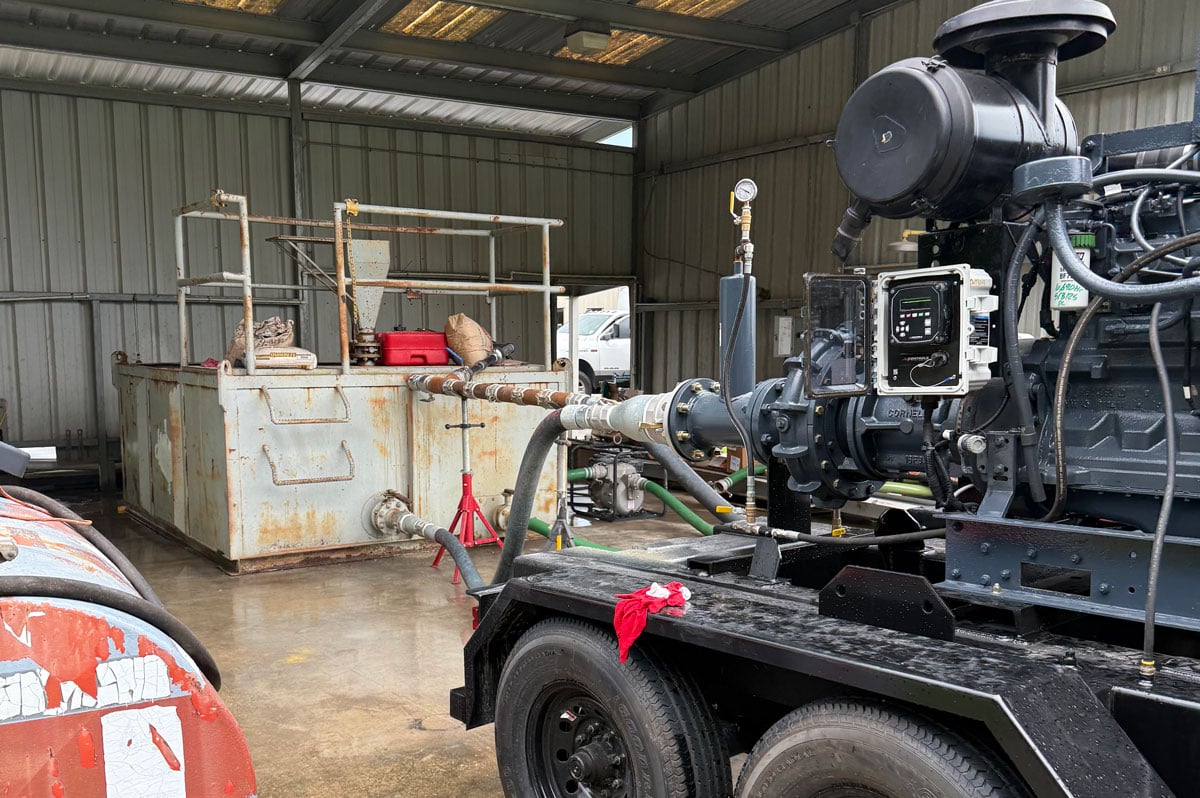
The slurry test is the part of API Spec 7V that separates this certification from anything else on the market. The test pumps water-based drilling mud loaded with 2% sand content through the valve continuously for 200 hours. That's just over eight straight days of running abrasive slurry through a piece of equipment that, in the field, sits inside the drill string and gets exactly this kind of abuse.
Two hundred hours is the test duration once the rig is built and the slurry mixture is dialed in. Getting there took an additional 40-50 hours of setup work just to get the sand content, mud weight, and flow rate stable enough to run a valid test. Sand percentage drifts as you pump - sand settles, mud thins, flow rates change - so building a closed-loop system that holds 2% sand content steady for 200 hours is its own engineering problem before you ever start the clock on the actual test.
Drilling mud is one of the more punishing service environments in the industry. The U.S. Geological Survey and various drilling fluid handbooks document how aggressive solid-laden mud is on metal sealing surfaces - it's why mud pump fluid ends are considered consumables in most operations. Asking a float valve to hold pressure after 200 hours of that, then proving it on a test bench, is the bar 7V sets.
Why Does API Spec 7V Matter for Drilling Operations?
For drilling contractors and operators, API Spec 7V matters because it gives you a verifiable answer to a question that used to require taking a vendor's word: did this valve actually get tested under conditions that look like the conditions it's about to see? Before 7V certification existed in this product category, the answer was whatever the manufacturer's data sheet said.
A few practical implications:
Specification language gets cleaner.
Procurement teams can now write "API Spec 7V certified" into purchase orders for drill pipe float valves and have it mean something verifiable, the same way "API 7K certified" means something on rotary equipment.
Audit trails get easier.
API monogram licensees go through annual audits of their quality management systems, manufacturing processes, and testing capability. If a valve fails in the field, the documentation trail back through manufacturing already exists.
Risk profile changes.
A non-return valve failure during drilling can contribute to well control events. The International Association of Drilling Contractors and major operators have spent decades pushing equipment standards in this direction precisely because the cost of a well control event dwarfs any savings on cheaper, uncertified equipment.
For more on why pressure-tested, certified float valves matter operationally, our earlier post on why to buy a certified, pressure-tested float valve covers the case in detail.
What's Covered Under Keystone's API Spec 7V Certification?
Every drill pipe float valve Keystone manufactures is covered. That includes both major design families and all sizes within each family.
| Series | Design Type | Coverage Under API Spec 7V |
|---|---|---|
| F Series | Plunger-type DPFV - the spring-loaded plunger design used in standard drilling applications across most operators. | All sizes manufactured by Keystone are covered under the certification scope. |
| G Series | Flapper-type DPFV - the hinged flapper design typically used where lower pressure drop or full-bore access is needed. | All sizes manufactured by Keystone are covered under the certification scope. |
If you've been running Keystone valves already, the valves themselves haven't changed. What changed is the documentation and testing trail behind them. The same designs that have been in the field now have third-party certification confirming they meet API Spec 7V. For a deeper look at the lineup, see Keystone's full line of float valves and the breakdown of the 9 types of drill pipe float valves.
How Does API Spec 7V Compare to Other API Standards?
API publishes specifications across nearly every major category of oilfield equipment. Spec 7V is the standard that applies specifically to flow control valves inside the drill string. A few of the standards drilling teams encounter most often:
| API Specification | Equipment Covered | Relevance to DPFVs |
|---|---|---|
| API Spec 7V | Drill pipe float valves, kelly valves, IBOPs - the flow control equipment that sits inside the drill string. | This is the direct certification standard for drill pipe float valves and the one Keystone now holds. |
| API Spec 7K | Drilling and well servicing equipment including rotary tables, swivels, and elevators. | Related downhole tooling standard but does not cover float valves themselves. |
| API Spec 8C | Drilling and production hoisting equipment including elevators, links, and spiders. | Covers handling tools rather than flow control; sits alongside 7V in most rig spec packages. |
| API Spec 16A | Drill-through equipment including blowout preventers and choke manifolds. | Covers surface well control equipment rather than the valves inside the string. |
Each standard exists because the equipment it covers fails differently and needs to be tested differently. A BOP failure mode is not a float valve failure mode, and the test protocols reflect that. Operators putting together a complete equipment spec for a rig typically reference several of these standards together. The Society of Petroleum Engineers and IADC publish guidance on how operators should approach combined-standard equipment audits.
About Keystone Energy Tools
 Keystone Energy Tools is a manufacturer with over fifty years of combined experience in designing, manufacturing, and delivering high-quality oilfield tools, including elevators, slips, dies and inserts, tongs dies, safety clamps, stabbing guides, drill pipe float valves, baffle plates, float valve pullers, rotating mouseholes, and tong blocks.
By using the latest in 3D modeling for product design and by staying current with the rapid advances in manufacturing technology and quality-assurance standards, Keystone is able to manufacture and produce the most reliable products on the market today. All Keystone Handling Tools are manufactured according to API 8C and API 7K Standards.