---
title: Different Types of Drill Pipe Float Valves | Keystone Energy Tools
description: Compare Model F plunger and Model G flapper float valves, ported and auto-fill options, sizing, and best-practice installation for safer drilling.
image: https://info.keystoneenergytools.com/hubfs/FLAOT-VALVES-WITH-DESCRIPTION-300-DPI-2-Bold-1200x565-1.png
---
- [Blog](https://info.keystoneenergytools.com/blog)
- [Manuals](https://info.keystoneenergytools.com/operating-manuals)
- [Company](https://www.keystoneenergytools.com/company/)
- [Quality](https://info.keystoneenergytools.com/en/keystone-quality)
- [Services](https://www.keystoneenergytools.com/oil-field-tools-services/)
- [Careers](https://www.keystoneenergytools.com/careers/)
- [Contact](https://www.keystoneenergytools.com/contact/)
- [Request a Quote](https://www.keystoneenergytools.com/contact/request-a-quote/)
[](https://www.keystoneenergytools.com/)
- [Home](https://www.keystoneenergytools.com/)
- [Handling Tools](https://www.keystoneenergytools.com/handling-tools/)
- [Valves](https://www.keystoneenergytools.com/valves/)
- [Dies & Inserts](https://www.keystoneenergytools.com/inserts-dies/)
- [Request A Quote](https://www.keystoneenergytools.com/contact/request-a-quote/)
- [Handling Tools](https://www.keystoneenergytools.com/handling-tools/?__hstc=233546881.707e4616149af298e4c12cdefc44b69f.1553880801470.1553880801470.1553880801470.1&__hssc=233546881.4.1553880801471&__hsfp=854645007)
- [Beckets & Bails](https://www.keystoneenergytools.com/handling-tools/beckets-bails/)
- [Bowls & Slips](https://www.keystoneenergytools.com/handling-tools/bowls-slips/)
- [Elevators](https://www.keystoneenergytools.com/handling-tools/elevators/)
- [Square Shoulder Elevators](https://www.keystoneenergytools.com/handling-tools/elevators/a-series/)
- [Bottleneck Elevators](https://www.keystoneenergytools.com/handling-tools/elevators/g-series/)
- [Slip Type Elevators](https://www.keystoneenergytools.com/handling-tools/elevators/y-series-slip-type/)
- [Slim Hole Slip Type Elevator](https://www.keystoneenergytools.com/handling-tools/elevators/slim-hole-y-series/)
- [Side Door Elevators](https://www.keystoneenergytools.com/handling-tools/elevators/slx-series/)
- [Single Joint Elevators](https://www.keystoneenergytools.com/handling-tools/elevators/single-joint-elevators/)
- [Pipe Jacks and Rollers](https://www.keystoneenergytools.com/handling-tools/pipe-jacks-and-rollers/)
- [Rotating Mouse-Hole Tool](https://www.keystoneenergytools.com/handling-tools/rotating-mouse-hole-tool/)
- [Safety Clamps](https://www.keystoneenergytools.com/handling-tools/safety-clamps/)
- [Slip Lifting Device](https://www.keystoneenergytools.com/handling-tools/slip-lifting-device/)
- [Slips](https://www.keystoneenergytools.com/handling-tools/drill-pipe-slips/)
- [Drill Pipe Rotary Slips](https://www.keystoneenergytools.com/handling-tools/slips/drill-pipe-rotary-slips/)
- [Drill Collar Slips](https://www.keystoneenergytools.com/handling-tools/slips/drill-collar-slips/)
- [Casing Slips](https://www.keystoneenergytools.com/handling-tools/slips/casing-slips/)
- [Stabbing Guides](https://www.keystoneenergytools.com/handling-tools/stabbing-guides/)
- [Tong Blocks](https://www.keystoneenergytools.com/handling-tools/tong-blocks/)
- [Tubing Tongs](https://www.keystoneenergytools.com/handling-tools/tubing-tongs/)
- [Inserts & Dies](https://www.keystoneenergytools.com/inserts-dies/)
- [Elevator Inserts](https://www.keystoneenergytools.com/inserts-dies/elevator-inserts/)
- [SLIP INSERTS](https://www.keystoneenergytools.com/inserts-dies/slip-inserts/)
- [Tong Dies](https://www.keystoneenergytools.com/inserts-dies/tong-dies/)
- [Safety Products](https://www.keystoneenergytools.com/oilfield-safety-products/)
- [Safety Flex Handles](https://www.keystoneenergytools.com/oilfield-safety-products/slip-safety-flex-handles/)
- [Safety Stands](https://www.keystoneenergytools.com/oilfield-safety-products/safety-stands/)
- [Tong Die Drivers](https://www.keystoneenergytools.com/inserts-dies/tong-dies/)
- [Tong Safety Handles](https://www.keystoneenergytools.com/oilfield-safety-products/tong-safety-handles/?__hstc=233546881.707e4616149af298e4c12cdefc44b69f.1553880801470.1553880801470.1553880801470.1&__hssc=233546881.4508.1553879796294&__hsfp=854645007)
- [Valves](https://www.keystoneenergytools.com/valves/)
- [Baffle Plates](https://www.keystoneenergytools.com/valves/baffle-plates/)
- [Coil Tubing Float Valves](https://www.keystoneenergytools.com/valves/coil-tubing-float-valves/)
- [Drill Pipe Float Valves](https://www.keystoneenergytools.com/valves/drill-pipe-float-valves/)
- [Float Valve Pullers](https://www.keystoneenergytools.com/valves/float-valve-pullers/)
- [Mud Screens](https://www.keystoneenergytools.com/valves/mud-screens/)
- [Repair Kits](https://www.keystoneenergytools.com/valves/repair-kits/)
The 9 Types of Drill Pipe Float Valves
- [Home](https://www.keystoneenergytools.com/)
- The 9 Types of Drill Pipe Float Valves
[Next](https://info.keystoneenergytools.com/blog/5-most-important-oilfield-tools) [Previous](https://info.keystoneenergytools.com/blog/top-10-trends-shaping-the-oil-and-gas-industry)
# [The 9 Types of Drill Pipe Float Valves](https://info.keystoneenergytools.com/blog/9-types-of-drill-pipe-float-valves)
%20(1).png?width=870&height=363&name=Untitled%20design%20(12)%20(1).png)
Drill pipe float valves are one-way safety valves that stop drilling fluid from flowing back into the drill string when making and breaking connections. Keystone makes nine models split into plunger types (F, FA, FC) for instant, economical shutoff and flapper types (G, GA, GC, GCA, GS, GAS) for full-flow, abrasive, and high-pressure wells. Pick a plunger valve for routine drilling, an auto-fill model (FC or GC) to save run-in time, and the GS or GAS for high-flow corrosive conditions.
[Drill pipe float valves](https://info.keystoneenergytools.com/blog/introducing-keystones-energys-drill-pipe-float-valves), often referred to as non-return valves, are critical components [in drilling operations](https://info.keystoneenergytools.com/blog/unlock-the-power-of-precision-keystone-energy-tools-cutting-edge-dies-for-oil-and-gas-drilling), particularly in the oil and gas industry. These [downhole safety devices](https://info.keystoneenergytools.com/blog/drilling-rig-safety) play a vital role in controlling the flow of drilling fluids, preventing unwanted backflow, and keeping operations safe and efficient. As drilling methods evolve, the demand for more reliable and specialized float valves has grown.
This post breaks down the key features and applications of [drill pipe float valves](https://www.bakerdrillpipefloatvalves.com/), including how they work, where they're used in [the oil and gas industry](https://www.mmvalve.com/blog/how-high-quality-equipment-reduces-downtime-in-oil-and-gas-drilling-operations), and the different valve models available.
1. [What is a Drill Pipe Float Valve?](https://info.keystoneenergytools.com/blog/9-types-of-drill-pipe-float-valves#what-is-a-drill-pipe-float-valve)
2. [Applications of Drill Pipe Float Valves](https://info.keystoneenergytools.com/blog/9-types-of-drill-pipe-float-valves#applications-of-drill-pipe-float-valves)
3. [9 Types of Drill Pipe Float Valves](https://info.keystoneenergytools.com/blog/9-types-of-drill-pipe-float-valves#nine-types-of-drill-pipe-float-valves)
4. [Drill Pipe Float Valve Sizing](https://info.keystoneenergytools.com/blog/9-types-of-drill-pipe-float-valves#float-valve-sizing)
5. [Installation Best Practices](https://info.keystoneenergytools.com/blog/9-types-of-drill-pipe-float-valves#installation-best-practices)
6. [Keystone's Full Line of Float Valves](https://info.keystoneenergytools.com/blog/9-types-of-drill-pipe-float-valves#keystones-full-line-of-float-valves)
[](https://cta-redirect.hubspot.com/cta/redirect/5221915/7a423eeb-0652-46e7-ae06-c566f16cbe16)
## What is a Drill Pipe Float Valve?
**A [drill pipe float valve](https://info.keystoneenergytools.com/blog/say-hello-to-keystones-full-line-of-float-valves) is a one-way [safety valve](https://www.mmvalve.com/blog/the-essential-role-of-safety-valves-in-well-control) designed to prevent the backflow of drilling fluids into the drill string when connections are being made or broken.** It functions as a check valve, letting fluid flow in one direction - from the wellbore to the surface - and preventing reverse flow, which could be dangerous to the crew or lead to inefficiencies.
Float valves are positioned in the drill stem (BHA) and are activated when the pumps are pumping fluid during drilling operations. They're designed to lock in place and prevent unwanted fluid flow, especially when the rig crew is making or breaking connections. Without [these valves](https://www.mmvalve.com/blog/elevating-valve-performance-with-advanced-mechanical-engineering), uncontrolled fluid flow could occur, leading to hazardous situations such as fluid loss or [environmental contamination](https://www.usdredge.com/_hcms/analytics/search/conversion?redirect=aHR0cHM6Ly93d3cudXNkcmVkZ2UuY29tL2xlYXJuL2RyZWRnaW5nLWVxdWlwbWVudC1jb21wYW55L2RyZWRnaW5nLWZvci1lbnZpcm9ubWVudGFsLXJlbWVkaWF0aW9u&ct=SEARCH&pid=8313510&cid=38801022574&t=ZW52aXJvbm1lbnRhbA%3D%3D&d=www.usdredge.com&c=2&c=3&c=6&rp=1&ab=false&opcid=&rs=UNKNOWN&hs-expires=1764379976&hs-version=1&hs-signature=APUk-v4V4u27u8ZXBV63Ea4guBpkiKx0eQ).
## Applications of Drill Pipe Float Valves
In the [oil and gas industry](https://www.usdredge.com/_hcms/analytics/search/conversion?redirect=aHR0cHM6Ly93d3cudXNkcmVkZ2UuY29tL2RyZWRnaW5nLXNlcnZpY2VzL29pbGZpZWxkLXN1cHBvcnQv&ct=SEARCH&pid=8313510&cid=41598773181&t=b2ls&d=www.usdredge.com&c=2&c=3&rp=1&ab=false&opcid=&rs=UNKNOWN&hs-expires=1764379736&hs-version=1&hs-signature=APUk-v5fTTbmxpnznJocHA5ZUDUCHOc_qw), drilling operations are complex and often carried out under extreme pressure and challenging conditions. [Drill pipe float valves are essential](https://info.keystoneenergytools.com/blog/drill-pipe-float-valve-size-chart-and-installation) in preventing backflow and making sure the rig crew can work safely and efficiently. They're most commonly used in the following applications:
- [Drilling Operations](https://info.keystoneenergytools.com/blog/why-buy-a-certified-pressure-tested-float-valve-for-drilling): Float valves prevent backflow when connections are made or broken during drilling operations. This keeps the drilling fluid in place and prevents issues like fluid loss or contamination.
- Cementing Operations: During cementing, float valves help maintain a steady flow of fluid and make sure cement is pumped efficiently into the wellbore, preventing the cement from flowing back into the drill string.
- Corrosive and Abrasive Environments: Certain models are designed specifically for wells with highly corrosive or abrasive drilling fluids. These valves can withstand harsh conditions and maintain the integrity of the drilling operation.
## 9 Types of Drill Pipe Float Valves
Drill pipe float valves come in various models, each designed to meet the needs of different drilling environments and applications. The table below compares all nine at a glance, followed by a full breakdown of each model.
| Model | Type | Key Feature | Best For |
| --- | --- | --- | --- |
| **F** | Plunger | Instant piston shutoff | Standard drilling, positive shutoff |
| **FA** | Ported plunger | Ported piston, partial auto-fill + pressure monitoring | Advanced ops needing pressure data |
| **FC** | Auto-fill plunger | Self-releasing key holds plunger open on run-in | Saving time on run-in |
| **G** | Flapper | Steel Hardened full-flow flapper | Abrasive fluids, harsh conditions |
| **GA** | Ported flapper | Carbide orifice for differential pressure monitoring | Complex ops needing pressure monitoring |
| **GC** | Auto-fill flapper | Self-releasing key holds flapper partly open on run-in | Clean, spill-reducing fill |
| **GCA** | Auto-fill + monitoring flapper | Combines G, GC, and GA features | Fluid control plus pressure monitoring |
| **GS** | High-flow flapper | Stackable, relief groove + safeguard pocket | High-flow corrosive wells |
| **GAS** | High-flow monitoring flapper | Tungsten-carbide insert, partial auto-fill | High-flow corrosive wells needing pressure data |
### Model F Plunger Type Valve
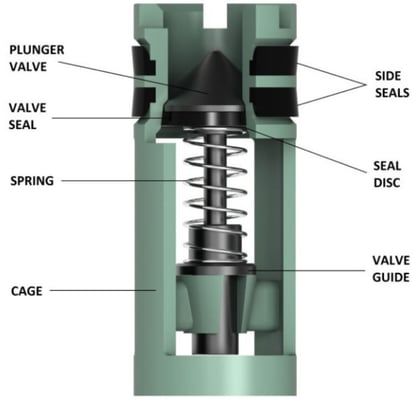
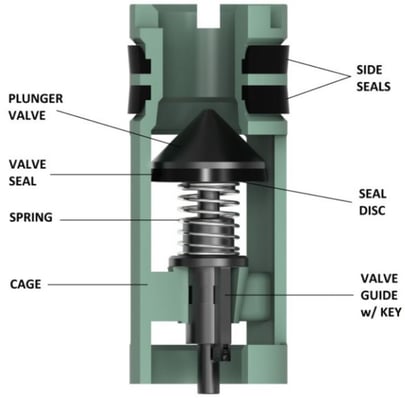
**The Model F Plunger Type Valve uses a piston to deliver an instant, positive shutoff - a reliable and economical way to stop flow-back.** This model is ideal for standard drilling operations, offering positive shutoff during connections and consistent fluid control. It's especially useful during routine operations where preventing backflow is critical for [safety and efficiency](https://info.keystoneenergytools.com/blog/safety-over-profits).
### Model FA Ported Plunger Type Valve
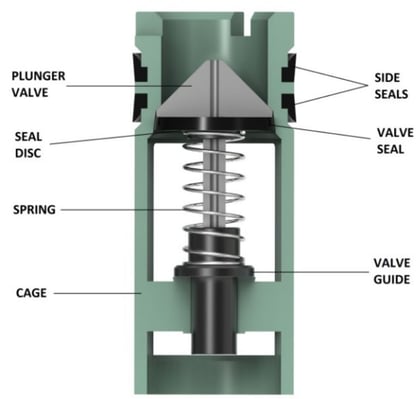
**The Model FA is an enhanced Model F with a ported piston that lets fluid pass through the center of the valve.** This enables automatic partial filling of the drill pipe during run-in, adding a layer of functionality. The valve also allows gas pressure and differential pressure monitoring at the bit head, making it useful for more advanced operations that require pressure monitoring.
### Model FC Plunger Type Automatic Fill Valve
**The Model FC uses a distinctive releasing key and slotted valve stem that keeps the plunger open during run-in, letting the pipe fill from the bottom.** This saves time and reduces mess, improving the overall efficiency of the operation. The plunger automatically releases when circulation begins, allowing smooth fluid flow. It's a strong choice for operations where time savings and efficiency matter most.
### Model G Full Flow Flapper Type Valve
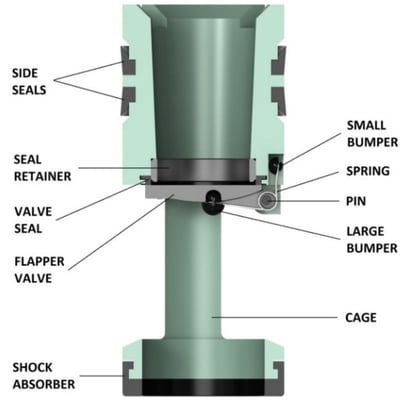
**The Model G is built for particularly abrasive drilling fluids, making it ideal for harsh conditions.** It features a hardened steel flapper that allows full, unobstructed flow and a quick-opening mechanism that keeps shavings from entering the drill string when circulation stops. The valve also fully opens when the first joint is raised, preventing the pulling of wet joints.
### Model GA Flapper Type Valve
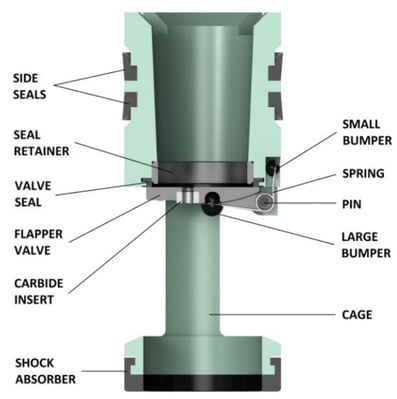
**The Model GA is similar to the Model G as it incorporates a tungsten-carbide orifice with a 1/4" thru hole.** This ported flapper enables differential pressure monitoring at the surface and allows partial automatic filling of the drill pipe during run-in. It combines the benefits of the Model G with pressure monitoring, making it suitable for more complex operations.
### Model GC Automatic Fill Flapper Type Valve
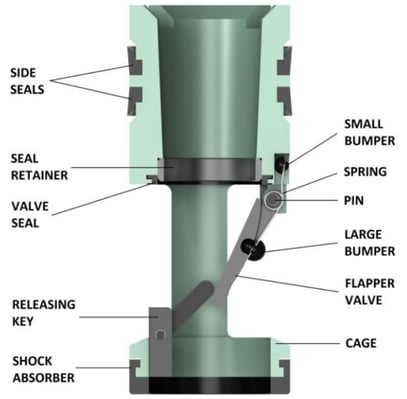
**The Model GC uses a self-releasing key assembly that keeps the flapper partially open during run-in, letting the pipe fill from the bottom.** Like the Model FC, this saves time and reduces the risk of spills or environmental hazards. The valve fully opens when the first joint is raised, preventing wet joints and keeping operations safe and clean.
### Model GCA Automatic Fill/Pressure Monitoring Flapper Type Valve
**The Model GCA combines the features of the G, GC, and GA valves in one.** It offers an unobstructed bore through the valve, measures differential pressures, and allows automatic partial filling of the drill pipe during run-in. This valve is ideal for complex operations where both fluid control and pressure monitoring are required.
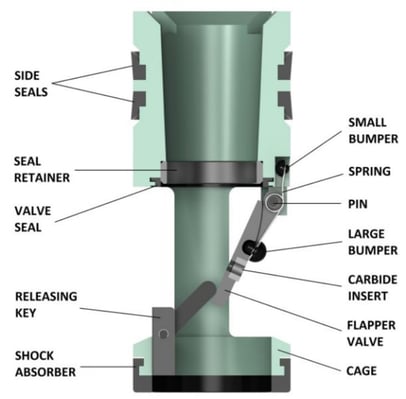
### Model GS - Flapper Type High Flow Wells
**The Model GS is designed for high-flow, corrosive wells.** It features a cage built to maximize flow through the valve while holding its pressure rating. The flapper has a relief groove and a safeguard pocket to protect the pin and spring against wear caused by harsh, corrosive environments. The GS is also stackable, allowing two valves to run simultaneously, which makes it highly versatile for high-flow applications.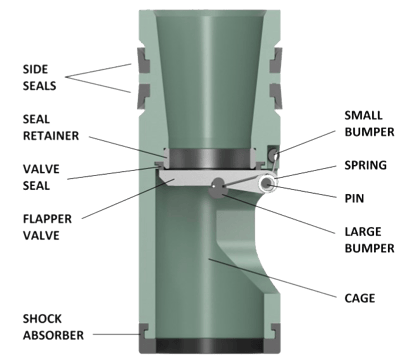
### Model GAS - High Flow Pressure Monitoring
**The Model GAS is similar to the GS but adds a tungsten-carbide insert in the flapper valve for extra wear resistance.** That insert helps the valve handle the harsh conditions of high-flow corrosive wells. The GAS also allows partial automatic filling of the drill pipe during run-in, further extending its functionality in demanding drilling environments.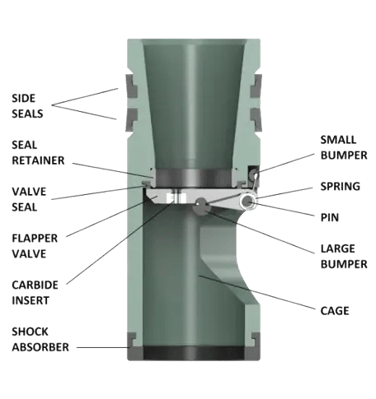
## Drill Pipe Float Valve Sizing
Most size charts use the same four dimensions. Verify each before ordering:
- **D – Valve OD** (must fit the recess bore)
- **R – Recess OD** (normally **D + 1/32 in.**)
- **L – Overall valve length** (recess must be deep enough)
- **T – Baffle-plate recess OD** (when a separate baffle or instrument plate is used)
Some catalogs also list **ID** for flow considerations. Note that certain high-flow flapper variants (e.g., GS/GAS) may be exceptions to the standard chart.
## Installation Best Practices
### Prep and Orientation
- **Clean and inspect** the recess bore; remove debris that could nick seals.
- **Lubricate the seals** lightly.
- **Insert with the top of the valve facing up** in the string; **gently rotate** as you lower it to ease insertion and protect side seals.
### Running Multiple Valves
If you plan to run two float valves in the same drill string, **separate them** rather than stacking, unless the model is specifically designed for tandem use. Separation helps avoid functional interference and eases diagnostics.
### Tripping and Auto-fill Considerations
Auto-fill (ported) designs allow the pipe to **fill from the bottom** during trips, which **reduces run-in time** and helps mitigate the **“ram effect”** that can create downhole pressure surges. Choose GC/FC-type variants when you need this behavior. Maintain proper fluid level on trips to avoid pressure shocks.
### Function Checks and Records
Before going in hole:
- **Surface test** operation and verify seal integrity per your company procedure.
- **Record model/size/serials** for traceability; many suppliers serialize and can provide pressure-test certificates on request.
### Common Mistakes to Avoid
- Forcing a valve into an undersized recess or ignoring **R/L/T** requirements.
- Installing **upside-down** or dry, which damages seals and compromises shut-off.
- Skipping auto-fill where long strings and rapid trips risk surge events.
For more detailed information on sizing and installation, check out our article [Drill Pipe Float Valve Size Chart and Installation](https://info.keystoneenergytools.com/blog/drill-pipe-float-valve-size-chart-and-installation).
## Keystone's Full Line of Float Valves
At Keystone, we understand the critical role float valves play in [ensuring the safety and success](https://www.keystoneenergytools.com/oilfield-safety-products/) of your drilling operations. Our range of high-quality float valves is built to withstand even the toughest conditions, offering reliable performance and durability. Whether you're drilling in standard, abrasive, or corrosive environments, Keystone's precision-manufactured valves are made to meet your specific needs.
Keystone Energy Tools is now the first drill pipe float valve manufacturer in the world [certified to API Spec 7V,](https://info.keystoneenergytools.com/blog/api-spec-7v-certification) covering all G and F series models in every size. If you spec, source, or run drill pipe float valves, you can now require API Spec 7V certification on your purchase orders and verify it through API's Composite List. Ask your current supplier where they stand on 7V - the answer tells you a lot about what's actually inside the valve body.
If you're looking for a trusted supplier of float valves that can stand up to the rigors of your drilling operations, Keystone has you covered. See our full range of float valves and find out how they can improve your drilling efficiency and safety.
[](https://cta-redirect.hubspot.com/cta/redirect/5221915/5228aeb7-7e20-42c4-bfba-95e94ca06e4a)
### What's the difference between flapper and plunger drill pipe float valves?
Plunger float valves (Keystone Models F, FA, FC) use a spring-loaded piston to seal against backflow and give an instant, positive shutoff - a reliable, economical choice for standard drilling. Flapper float valves (Models G, GA, GC, GCA, GS, GAS) use a hinged, investment-cast flapper that swings fully open for unobstructed flow, which suits abrasive or high-flow fluids. Plunger types are common for routine operations; flapper types handle harsher downhole conditions and full-flow circulation.
### Which drill pipe float valve is best for corrosive or high-flow wells?
For high-flow, corrosive wells, Keystone's Model GS and Model GAS flapper valves are built for the job. The GS uses a cage that maximizes flow while holding its pressure rating, plus a relief groove and safeguard pocket that protect against wear in harsh fluids, and it's stackable so two valves can run at once. The GAS adds a tungsten-carbide insert in the flapper for extra wear resistance and allows partial automatic filling during run-in.
### What does an automatic fill float valve do?
An automatic fill float valve lets the drill pipe fill from the bottom as it's run into the hole, instead of filling from the top. Keystone's Model FC uses a slotted valve stem and the Model GC uses a self-releasing key to hold the valve partially open during run-in. This saves time and cuts down on spills and mess. The FC plunger releases when circulation begins, and the GC opens fully when the first joint is raised.
### Where is a float valve located in the drill string?
A float valve sits near the bottom of the drill pipe, typically in the bit sub or a float sub just above the drill bit. From there it activates as the pipe is lowered into or raised out of the wellbore, locking to stop unwanted fluid flow during connections. Placing it downhole near the bit lets it control backflow at the source and keep the rig crew safe while making or breaking connections.
---
#### About Keystone Energy Tools
[](https://www.keystoneenergytools.com/)[Keystone Energy Tools](https://www.keystoneenergytools.com/company/) is a [manufacturer](https://info.irefze.com/news/10-things-learned-from-doing-business-with-hi-kalibre-in-10-years) with over fifty years of combined experience in [designing](https://www.cypressfabrication.com/insights/everything-to-know-about-process-engineering), [manufacturing](https://info.stonewallco.com/blog/what-is-manufacturing-engineering), and delivering high-quality [oilfield tools](https://www.keystoneenergytools.com/5-most-important-oilfield-tools/), including [elevators](https://www.keystoneenergytools.com/handling-tools/elevators/), [slips, dies and inserts](https://www.keystoneenergytools.com/handling-tools/bowls-slips/), [tongs dies,](https://www.keystoneenergytools.com/what-are-rig-tongs-used-for/) [safety clamps](https://www.keystoneenergytools.com/handling-tools/safety-clamps/), [stabbing guides](https://www.keystoneenergytools.com/handling-tools/drill-pipe-stabbing-guides/), [drill pipe](https://www.keystoneenergytools.com/7-types-of-drill-pipe-float-valves/) [float valves](https://www.keystoneenergytools.com/valves/), [baffle plates](https://www.keystoneenergytools.com/valves/baffle-plates/), [float valve pullers](https://www.keystoneenergytools.com/valves/float-valve-pullers/), [rotating mouseholes](https://www.keystoneenergytools.com/handling-tools/rotating-mouse-hole-tool/), and [tong blocks](https://www.keystoneenergytools.com/handling-tools/tong-blocks/).
By using the latest in 3D modeling for product design and by staying current with the rapid advances in manufacturing technology and [quality-assurance standards,](https://www.keystoneenergytools.com/api-spec-8c-drilling-and-production-hoisting-equipment/) [Keystone](https://www.keystoneenergytools.com/contact/)is able to manufacture and produce the most [reliable products](https://www.keystoneenergytools.com/5-rig-safety-precautions-you-need-to-follow/) on the market today. All Keystone Handling Tools are manufactured according to [API 8C](https://www.keystoneenergytools.com/api-spec-8c-drilling-and-production-hoisting-equipment/)[and](https://www.keystoneenergytools.com/us-drilling-rig-locations/)[API 7K Standards](https://www.keystoneenergytools.com/api-7k-standards/)[.](https://www.keystoneenergytools.com/us-drilling-rig-locations/)
-
-
- [mailto:?subject=The%209%20Types%20of%20Drill%20Pipe%20Float%20Valves&body=https://info.keystoneenergytools.com/blog/9-types-of-drill-pipe-float-valves](mailto:?subject=The%209%20Types%20of%20Drill%20Pipe%20Float%20Valves&body=https://info.keystoneenergytools.com/blog/9-types-of-drill-pipe-float-valves)
[Next](https://info.keystoneenergytools.com/blog/5-most-important-oilfield-tools) [Previous](https://info.keystoneenergytools.com/blog/top-10-trends-shaping-the-oil-and-gas-industry)
### Quick Links
- [Download Product Catalog](https://info.keystoneenergytools.com/hubfs/KeyStone_February2019%20Theme/Pdfs/2018-Keystone-Energy-Tools-Product-Catalog.pdf)
- [Handling Tools](https://www.keystoneenergytools.com/handling-tools/)
- [Safety Products](https://www.keystoneenergytools.com/oilfield-safety-products/)
- [Company](https://www.keystoneenergytools.com/company/)
- [Services](https://www.keystoneenergytools.com/oil-field-tools-services/)
- [Product Blogs](https://www.keystoneenergytools.com/blog/)
- [Blog](https://info.keystoneenergytools.com/blog)
### Blog
### Contact
3711 Melancon Road
Broussard, LA 70518
\[P\] [337-365-4411](tel:337-365-4411)
\[F\] 337-365-4456
© Copyright 2019, Keystone Energy Tools LLC. All rights reserved.
```json
{
"@context" : "https://schema.org",
"@type" : "BlogPosting",
"author" : {
"@type" : "Person",
"name" : "Keystone Energy Tools",
"url" : "https://info.keystoneenergytools.com/blog/author/keystone-energy-tools"
},
"dateModified" : "2026-09-23T15:49:26.390Z",
"datePublished" : "2026-06-14T15:00:00.000Z",
"headline" : "Different Types of Drill Pipe Float Valves | Keystone Energy Tools",
"image" : [ "https://info.keystoneenergytools.com/hubfs/FLAOT-VALVES-WITH-DESCRIPTION-300-DPI-2-Bold-1200x565-1.png" ],
"mainEntityOfPage" : {
"@id" : "https://info.keystoneenergytools.com/blog/9-types-of-drill-pipe-float-valves",
"@type" : "WebPage"
},
"publisher" : {
"@type" : "Organization",
"logo" : {
"@type" : "ImageObject",
"url" : "https://info.keystoneenergytools.com/hubfs/KET%20Logo%20-%20Classic%20w%20Black%20Text.png"
},
"name" : "Keystone Energy Tools"
}
}
```
```json
{
"@context": "https://schema.org",
"@type": "BlogPosting",
"mainEntityOfPage": {
"@type": "WebPage",
"@id": "https://info.keystoneenergytools.com/blog/9-types-of-drill-pipe-float-valves"
},
"headline": "9 Types of Drill Pipe Float Valves,
"description": "Here’s a fast primer and reminder on the differences between the types of drill pipe float valves available. ",
"image": "https://www.keystoneenergytools.com/wp-content/uploads/2016/02/FLAOT-VALVES-WITH-DESCRIPTION-300-DPI-2-Bold-1200x565.png",
"author": {
"@type": "Organization",
"name": "Keystone Energy Tools"
},
"publisher": {
"@type": "Organization",
"name": "Keystone Energy Tools",
"logo": {
"@type": "ImageObject",
"url": ""
}
},
"datePublished": ""
}
```
```json
{
"@context" : "https://schema.org",
"@type" : "FAQPage",
"mainEntity" : [ {
"@type" : "Question",
"acceptedAnswer" : {
"@type" : "Answer",
"text" : "A drill pipe float valve is a one-way safety valve installed near the bottom of the drill string that lets drilling fluid flow up from the wellbore to the surface while blocking reverse flow back down the pipe. Also called a non-return valve, it prevents backflow when crews make or break connections, which protects against blowouts, fluid loss, and contamination. Float valves come in two main designs: plunger (piston) types and flapper types."
},
"name" : "What is a drill pipe float valve?"
}, {
"@type" : "Question",
"acceptedAnswer" : {
"@type" : "Answer",
"text" : "Plunger float valves (Keystone Models F, FA, FC) use a spring-loaded piston to seal against backflow and give an instant, positive shutoff, a reliable and economical choice for standard drilling. Flapper float valves (Models G, GA, GC, GCA, GS, GAS) use a hinged, investment-cast flapper that swings fully open for unobstructed flow, which suits abrasive or high-flow fluids. Plunger types are common for routine operations; flapper types handle harsher downhole conditions and full-flow circulation."
},
"name" : "What's the difference between flapper and plunger drill pipe float valves?"
}, {
"@type" : "Question",
"acceptedAnswer" : {
"@type" : "Answer",
"text" : "For high-flow, corrosive wells, Keystone's Model GS and Model GAS flapper valves are built for the job. The GS uses a cage that maximizes flow while holding its pressure rating, plus a relief groove and safeguard pocket that protect against wear in harsh fluids, and it is stackable so two valves can run at once. The GAS adds a tungsten-carbide insert in the flapper for extra wear resistance and allows partial automatic filling during run-in."
},
"name" : "Which drill pipe float valve is best for corrosive or high-flow wells?"
}, {
"@type" : "Question",
"acceptedAnswer" : {
"@type" : "Answer",
"text" : "An automatic fill float valve lets the drill pipe fill from the bottom as it is run into the hole, instead of filling from the top. Keystone's Model FC uses a slotted valve stem and the Model GC uses a self-releasing key to hold the valve partially open during run-in. This saves time and cuts down on spills and mess. The FC plunger releases when circulation begins, and the GC opens fully when the first joint is raised."
},
"name" : "What does an automatic fill float valve do?"
}, {
"@type" : "Question",
"acceptedAnswer" : {
"@type" : "Answer",
"text" : "A float valve sits near the bottom of the drill pipe, typically in the bit sub or a float sub just above the drill bit. From there it activates as the pipe is lowered into or raised out of the wellbore, locking to stop unwanted fluid flow during connections. Placing it downhole near the bit lets it control backflow at the source and keep the rig crew safe while making or breaking connections."
},
"name" : "Where is a float valve located in the drill string?"
} ]
}
```
```json
{
"@context" : "https://schema.org",
"@type" : "FAQPage",
"mainEntity" : [ {
"@type" : "Question",
"acceptedAnswer" : {
"@type" : "Answer",
"text" : "Plunger float valves (Keystone Models F, FA, FC) use a spring-loaded piston to seal against backflow and give an instant, positive shutoff - a reliable, economical choice for standard drilling. Flapper float valves (Models G, GA, GC, GCA, GS, GAS) use a hinged, investment-cast flapper that swings fully open for unobstructed flow, which suits abrasive or high-flow fluids. Plunger types are common for routine operations; flapper types handle harsher downhole conditions and full-flow circulation."
},
"name" : "What's the difference between flapper and plunger drill pipe float valves?"
}, {
"@type" : "Question",
"acceptedAnswer" : {
"@type" : "Answer",
"text" : "For high-flow, corrosive wells, Keystone's Model GS and Model GAS flapper valves are built for the job. The GS uses a cage that maximizes flow while holding its pressure rating, plus a relief groove and safeguard pocket that protect against wear in harsh fluids, and it's stackable so two valves can run at once. The GAS adds a tungsten-carbide insert in the flapper for extra wear resistance and allows partial automatic filling during run-in."
},
"name" : "Which drill pipe float valve is best for corrosive or high-flow wells?"
}, {
"@type" : "Question",
"acceptedAnswer" : {
"@type" : "Answer",
"text" : "An automatic fill float valve lets the drill pipe fill from the bottom as it's run into the hole, instead of filling from the top. Keystone's Model FC uses a slotted valve stem and the Model GC uses a self-releasing key to hold the valve partially open during run-in. This saves time and cuts down on spills and mess. The FC plunger releases when circulation begins, and the GC opens fully when the first joint is raised."
},
"name" : "What does an automatic fill float valve do?"
}, {
"@type" : "Question",
"acceptedAnswer" : {
"@type" : "Answer",
"text" : "A float valve sits near the bottom of the drill pipe, typically in the bit sub or a float sub just above the drill bit. From there it activates as the pipe is lowered into or raised out of the wellbore, locking to stop unwanted fluid flow during connections. Placing it downhole near the bit lets it control backflow at the source and keep the rig crew safe while making or breaking connections."
},
"name" : "Where is a float valve located in the drill string?"
} ]
}
```