|
API Spec 8C is the American Petroleum Institute standard that governs drilling and production hoisting equipment. It defines engineering design, inspection, load testing, and certification requirements to ensure lifting tools meet strict oilfield safety standards. |
The American Petroleum Institute (API) Publications Programs and Services is a comprehensive resource for all API standards and practices, technical documents, and equipment specifications. The catalog also includes reports and studies regarding the safety, efficiency, and responsibilities of the petroleum industry. The latest catalog also features updated API Spec 8C standards.
What is API 8C?
API Specification 8C is the American Petroleum Institute (API) standard that provides requirements for the design, manufacture, testing, and certification of hoisting equipment suitable for use in drilling and production operations.
API Spec 8C is published by the American Petroleum Institute (API), the leading authority for oil and gas equipment standards worldwide. It ensures lifting tools such as elevators, links, hooks, and blocks meet strict safety and performance requirements.
What does API 8C apply for?
API Specification 8C applies to drilling and production hoisting equipment used to lift, suspend, rotate, or handle tubulars and heavy components during oil and gas operations. These specifications dictate industry standards for the engineering design, material, and testing process for drilling and production hoisting equipment. The standards in this section apply to engineering design, material selection, inspection, load testing, traceability, and certification for the following pieces of equipment:
-
Casing Elevators
-
Spiders (if they can be used as elevators)
-
Kelly Spinners (if they can be used as hoisting equipment)
-
Sucker Rod Elevators
-
Hoisting Sheaves
-
Traveling Blocks and Hook Blocks
-
Connectors and Link Adapters
-
Rotary and Power Swivels
-
Drill-string Motion Compensators
-
Drilling Hooks
-
Power Subs
-
Pressure Vessels and Piping (if mounted on hoisting equipment)
-
Safety Clamps (if used as hoisting equipment)
-
Guide Dollies for Traveling Equipment
API 8C standards apply during drilling, well servicing, completion, and offshore lifting operations where elevators, hooks, and traveling blocks are subjected to extreme loads and environmental stress.
Why Is API 8C Compliance important?
API Spec 8C is one of the most critical safety standards governing oilfield lifting equipment worldwide. API 8C compliance regulates load-bearing hoisting equipment used in drilling operations. Without compliance, operators face increased risk of catastrophic lift failure, injury, regulatory penalties, and operational downtime.
What are the key benefits of API 8C Compliance?
API 8C compliance ensures drilling and production hoisting equipment is engineered, tested, and certified to meet strict safety and performance standards in oilfield operations. By adhering to API Spec 8C requirements, operators reduce operational risk, improve inspection consistency, and maintain regulatory and offshore compliance.
-
Reduces catastrophic lift failures
-
Ensures standardized inspection requirements
-
Supports recertification and traceability
-
Protects operators and drilling crews
-
Meets offshore and ABS compliance expectations
By choosing API 8C–compliant equipment, operators strengthen safety, maintain regulatory confidence, and ensure lifting tools perform reliably under demanding drilling and production conditions.
What are the API 8C Product Specification Levels (PSL)?
API Specification 8C standard establishes two Product Specification Level (PSL) requirements:
-
PSL 1: Standard technical requirements for design, materials, inspection, and testing.
-
PSL 2: Includes all PSL 1 requirements plus additional inspection, documentation, and quality controls
These PSL designations serve to define separate levels of technical requirements for parts. All requirements set forth are applicable only to PSL 1 unless they are identified as being PSL 2. Requirements for PSL 2 include all standards for PSL 1 as well as additional practices outlined for PSL 2. Additional and supplementary requirements are only required where specifically stated.
What are the API 8C Supplementary Requirements?
API 8C supplementary requirements (SR) are optional enhancements agreed upon between the manufacturer and purchaser to address specific operating conditions, including enhanced inspection, documentation, and performance needs based on specific operating conditions.
API 8C Supplementary Requirements include:
-
SR1 – Proof Load Testing: Requires additional load testing to verify the equipment can safely withstand its rated working load.
-
SR2 – Low-Temperature Testing: Ensures hoisting equipment maintains mechanical integrity in cold-weather or offshore environments.
-
SR3 – Data Book Documentation: Requires comprehensive manufacturing records, inspection reports, and traceability documentation.
-
SR4 – Additional Volumetric Examination of Castings: Mandates expanded non-destructive testing (NDT) of cast components to detect internal defects.
-
SR5 – Volumetric Examination of Wrought Material: Requires non-destructive testing of forged or wrought materials to ensure structural integrity.
Keystone Energy Tools knows API standards matter
API 8C standards are widely required across onshore and offshore drilling operations globally. These standards ensure industry-wide uniformity and adherence to best safety practices. When it’s time to re-certify your elevator, an inspector will require that all applicable components are in compliance with the current 8C standards. The easiest way to ensure that your drillpipe elevator will make the grade is to buy exclusively from API-licensed manufacturers.
Keystone Energy Tools can help you understand industry specifications and ensure that your equipment meets or exceeds those standards. Knowledgeable staff work to get you the parts you need on time and for a good value. Keystone only works with products that are API compliant and of the highest quality. For a quick quote or answers to your questions, contact Keystone any time.
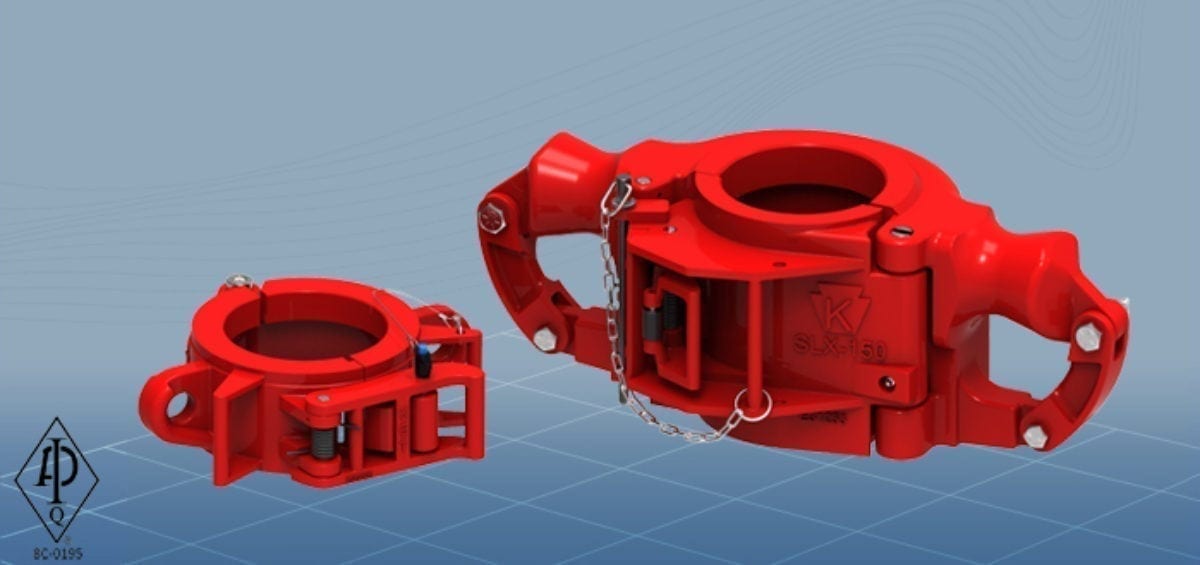
All Keystone Handling Tools are manufactured according to API 8C and API 7K Standards, and are compliant with ABS CDS requirements. When safety, certification, and traceability matter, Keystone supplies API 8C–compliant handling tools built to meet the demands of modern drilling operations.
FAQs
About Keystone Energy Tools
 Keystone Energy Tools is a manufacturer with over fifty years of combined experience in designing, manufacturing, and delivering high-quality oilfield tools, including elevators, slips, dies and inserts, tongs dies, safety clamps, stabbing guides, drill pipe float valves, baffle plates, float valve pullers, rotating mouseholes, and tong blocks.
By using the latest in 3D modeling for product design and by staying current with the rapid advances in manufacturing technology and quality-assurance standards, Keystone is able to manufacture and produce the most reliable products on the market today. All Keystone Handling Tools are manufactured according to API 8C and API 7K Standards.